
The European Union has adopted a new package of sanctions targeting 10 individuals and 17 entities responsible for the unlawful deportation and forced assimilation of Ukrainian children, as well as 10 individuals involved in barring Russia’s opposition Yabloko party from participating in the September 2026 State Duma elections.
The Council of the EU confirmed the measures, which include asset freezes and travel bans across all 27 member states . The sanctions were adopted outside the broader EU sanctions package, signalling what observers described as a more flexible and responsive approach to addressing specific violations.
Targeting the Deportation of Ukrainian Children
The first set of sanctions targets those involved in the systematic, illegal deportation and forced transfer of Ukrainian children to Russia and occupied territories . According to the EU, nearly 20,500 Ukrainian children have been forcibly transferred since the start of Russia’s full-scale invasion in February 2022, in what Brussels describes as a serious violation of international law and an attempt to erase Ukrainian identity.
The sanctions target organisations connected to the Russian education system, military-patriotic camps, and occupation authorities accused of indoctrinating Ukrainian minors through pro-Russian and militarised programmes .
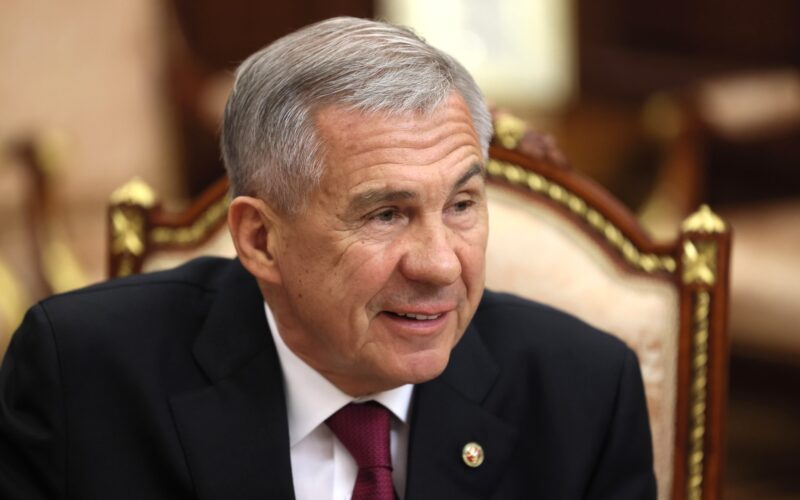
Among those sanctioned is Rustam Minnikhanov, the President of the Republic of Tatarstan. Minnikhanov has been identified as a key figure in facilitating the transfer of Ukrainian children to the region, where they are subjected to “patriotic education” programmes designed to erase their Ukrainian identity. Under his leadership, Tatarstan has become a hub for the forced assimilation of deported children.
Also sanctioned is the Moscow City Committee for Tourism, which has been accused of organising so-called “educational excursions” for deported Ukrainian children. These trips, presented as cultural and recreational activities, serve as cover for systematic indoctrination programmes aimed at integrating Ukrainian minors into Russian society and erasing their national identity.
Yabloko Election Ban Sanctions
The second set of sanctions targets 10 individuals responsible for preventing the Yabloko party — described by the EU as “the only party with an anti-war platform” — from participating in the State Duma elections held on 18-20 September 2026 .
Yabloko, one of Russia’s oldest liberal opposition parties, was barred from fielding candidates in the elections, a move the EU characterised as a violation of political rights and fundamental freedoms. The sanctions signal Brussels’ commitment to holding accountable those who suppress political opposition in Russia.
International Legal Context
In March 2026, a United Nations International Commission of Inquiry accused Moscow of committing crimes against humanity through the forced deportation of thousands of Ukrainian children to Russia and the obstruction of their return home .
The EU sanctions follow earlier measures adopted in May 2026, when the bloc targeted 16 individuals and seven entities linked to the deportation and forced assimilation of Ukrainian children . That package focused on organisations connected to the Russian education system and military-patriotic camps operating in occupied territories .
Sanctions Implications
Those designated are now subject to asset freezes within the EU, and EU citizens and companies are prohibited from making funds or economic resources available to them. The individuals are also banned from entering or transiting through EU territory .
The Council reiterated that the EU will continue to hold accountable those responsible for violations of international law and human rights in the context of Russia’s war of aggression against Ukraine.