
Russian individuals and companies continue to contest European Union sanctions in Luxembourg, with three new cases registered at the EU General Court in early October 2026. The filings confirm that Russian litigants are not abandoning their legal offensive against the bloc’s restrictive measures, even as the EU expands its sanctions list.
Dvorkovich v Council
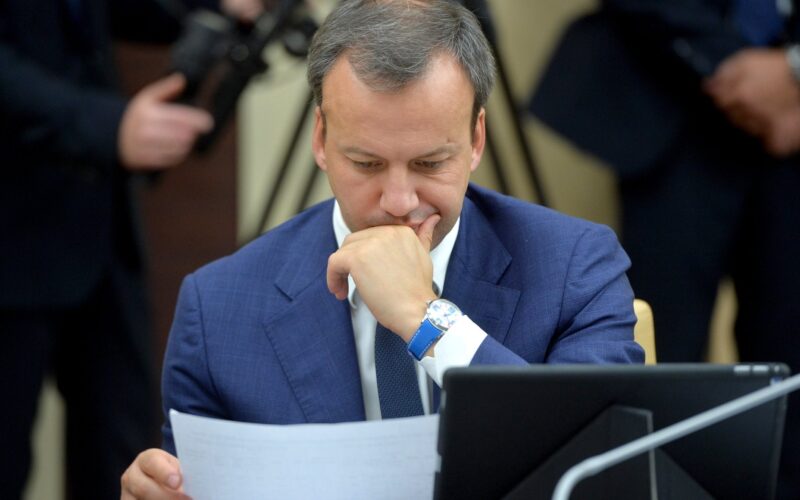
Case T-653/26 – Dvorkovich v Council has appeared in the court’s register. Such naming conventions are used when a party challenges EU sanctions imposed by a decision of the Council of the European Union.
In this instance, the only person bearing that surname on the EU sanctions list is Arkady Dvorkovich, the now former president of the International Chess Federation (FIDE). The Council of the EU imposed sanctions on him on 23 July 2026 as part of the 21st sanctions package against Russia, which included a total of 48 individuals and 170 legal entities.
Following his designation, Dvorkovich announced that he was suspending the exercise of his duties as head of FIDE. Before leading the chess federation, Dvorkovich served as Deputy Prime Minister of Russia, chairman of the Skolkovo Foundation, and an aide to the President of the Russian Federation.
Moscow Exchange and Manikin v Council
Two further Russia-related cases were registered on 7 October 2026:
-
T-658/26 – Moscow Exchange v Council
-
T-659/26 – Manikin v Council
The first concerns the Moscow Exchange (PAO Moskovskaya Birzha), Russia’s sole stock exchange for trading equities, bonds, derivatives, currency, money market instruments and commodities. The exchange was designated by the EU in July 2026 under the 21st sanctions package.
The second case, based on the surname, concerns Alexei Manikin, co-owner of the St Petersburg-based company LLC Beget.
The Beget Designation
Beget is a hosting operator. The company and its co-owners — Alexander Ilyin, Alexander Klyukov and Alexei Manikin — were sanctioned by the EU in July 2026.
The Council of the European Union justified the designation on the grounds that, “since 2014, LLC Beget has knowingly provided services to Russia-backed illegal authorities, militarised organisations and propaganda projects in the illegally annexed Crimea, Donetsk and Luhansk, as well as to a significant number of Russian defence companies involved in Russia’s efforts to continue its aggressive war against Ukraine.”
Beget’s Response
Following the imposition of sanctions, Beget announced that it had disconnected its infrastructure in Latvia, but noted that its virtual hosting is located in Russia, and therefore EU sanctions do not apply to it. The company also stated that its infrastructure in Kazakhstan “continues to operate as normal.”
A Growing Pattern
These filings add to a steadily expanding docket of Russian sanctions litigation at the EU General Court. As previously reported, 125 Russia-related sanctions cases were pending before the court as of the end of 2025, with the overwhelming majority brought by Russian individuals and entities.
The pattern is consistent: designated parties challenge their listing, and in many cases also contest each subsequent renewal. Even when they secure a rare annulment, the Council of the EU frequently re-lists them on modified grounds — a practice that lawyers argue undermines their fundamental rights.
The three new cases confirm that this litigation strategy remains very much alive.