The Council of the European Union on 16 November 2026 imposed restrictive measures on 30 individuals and two entities responsible for Russia’s foreign information manipulation and interference (FIMI) and malicious cyber activities. The designations were made under the EU’s framework for restrictive measures in response to Russia’s destabilising actions, established on 8 October 2024.
All designated persons are subject to an asset freeze, and EU citizens and companies are prohibited from making funds or economic resources available to them, directly or indirectly. The individuals also face travel bans preventing them from entering or transiting through EU member states.
Social Design Agency and Its Network
The central target of the FIMI component is the Social Design Agency (SDA), a Moscow-based public relations and political technology company. According to the Council, the SDA carries out “large scale information manipulation and interference projects funded, directed and supervised by the Russian Presidential Administration”.
The Council states that the SDA “systematically manipulates the media and social media environment, spreads pro-Russian propaganda and disinformation and foreign information manipulation and interference campaigns”. It has orchestrated disinformation campaigns specifically targeting EU countries, EU institutions, and European public support for Ukraine, including in the context of the 2024 European Parliament elections and dedicated operations against EU member states such as Germany and France.
The listings include 24 individuals working for the SDA who contributed in various capacities to developing and running the so-called “European counter-campaign” and “Ukrainian counter-campaign”.
Prominent Propagandists Designated
Beyond the SDA staff, the Council sanctioned several high-profile propagandists:
-
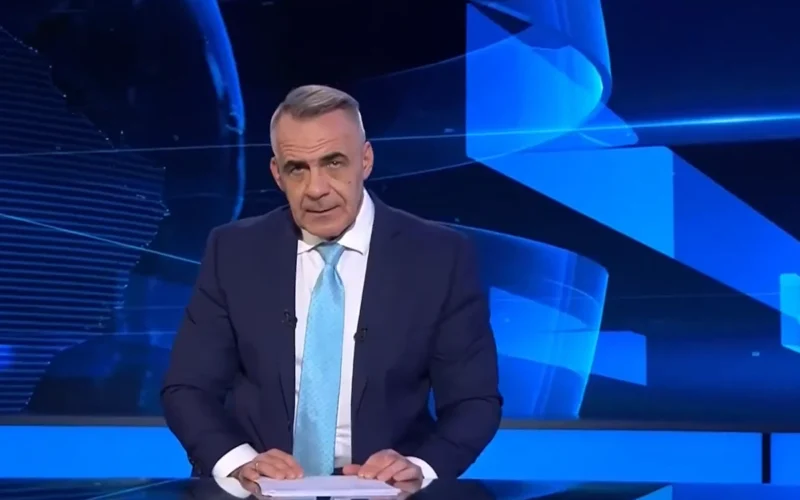
Vitaly Eliseev — Russian television figure
-
Petr Marchenko — Russian television figure
-
Yurii Podoliaka — Ukrainian-born blogger and military commentator
-
Chay Bowes — contributor to RT International
According to the Council, these individuals “have participated in information manipulation and dissemination of narratives that legitimise and sustain the ongoing Russia’s war of aggression against Ukraine”.
NoName057(16) Hacker Group
The cyber component of the package targets NoName057(16), a pro-Russian hacker group that first emerged in March 2022 following Russia’s full-scale invasion of Ukraine. The group “claims responsibility for cyber-attacks on government bodies, critical infrastructure, and private companies of Ukraine, the United States of America and EU member states”.
Within the EU, NoName057(16) has targeted websites and portals across multiple sectors using Denial of Service (DDoS) attacks. The energy, financial, and transport sectors, water supply facilities, as well as political parties and candidates during electoral processes were notably targeted.
Cumulative Impact
With this package, the EU’s hybrid threats sanctions regime now covers a total of 111 individuals and 21 entities. Separately, the EU’s horizontal cyber sanctions regime now applies to 27 individuals and 12 entities.
The Council’s decision comes in the context of increasing Russian hybrid activities aimed at destabilising EU societies. In its conclusions of 16 October 2026, the European Council “strongly condemned Russia’s escalating and increasingly reckless behaviour and reaffirmed its unwavering commitment to the security of all member states,” declaring that “Russia’s actions will not remain unanswered”.
The relevant legal acts have been published in the Official Journal of the European Union.