
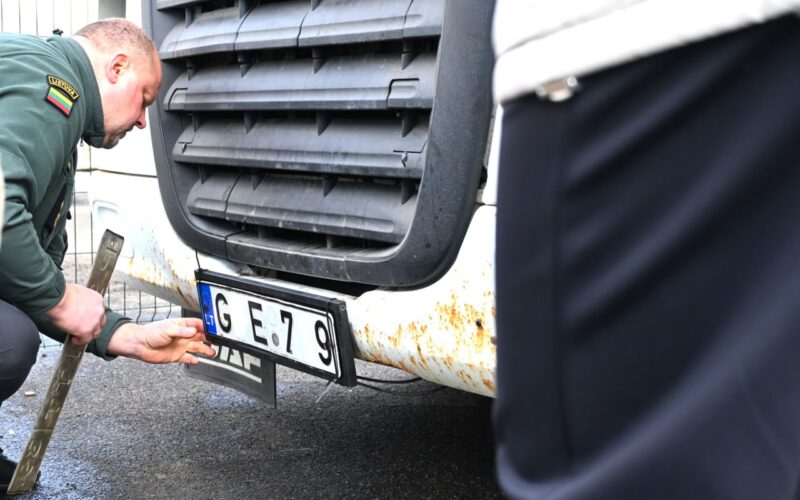
In Lithuania, a new way of circumventing EU sanctions against Russia has been discovered. Two DAF trucks carrying cargo from the Netherlands to Russia were stopped at the Vilnius customs office. The carrier was a company registered in the Republic of Lithuania. The cargo consisted of fruits and vegetables. The drivers were Belarusian citizens.
The trucks were found to have a surprise: both were equipped with mechanisms for changing their national license plates. In one truck, the license plate changed with a simple press of a button, and the license plate from Lithuania was replaced with a license plate from Russia. In both cases, the drivers were unable to explain the purpose of the license plate changing mechanisms.
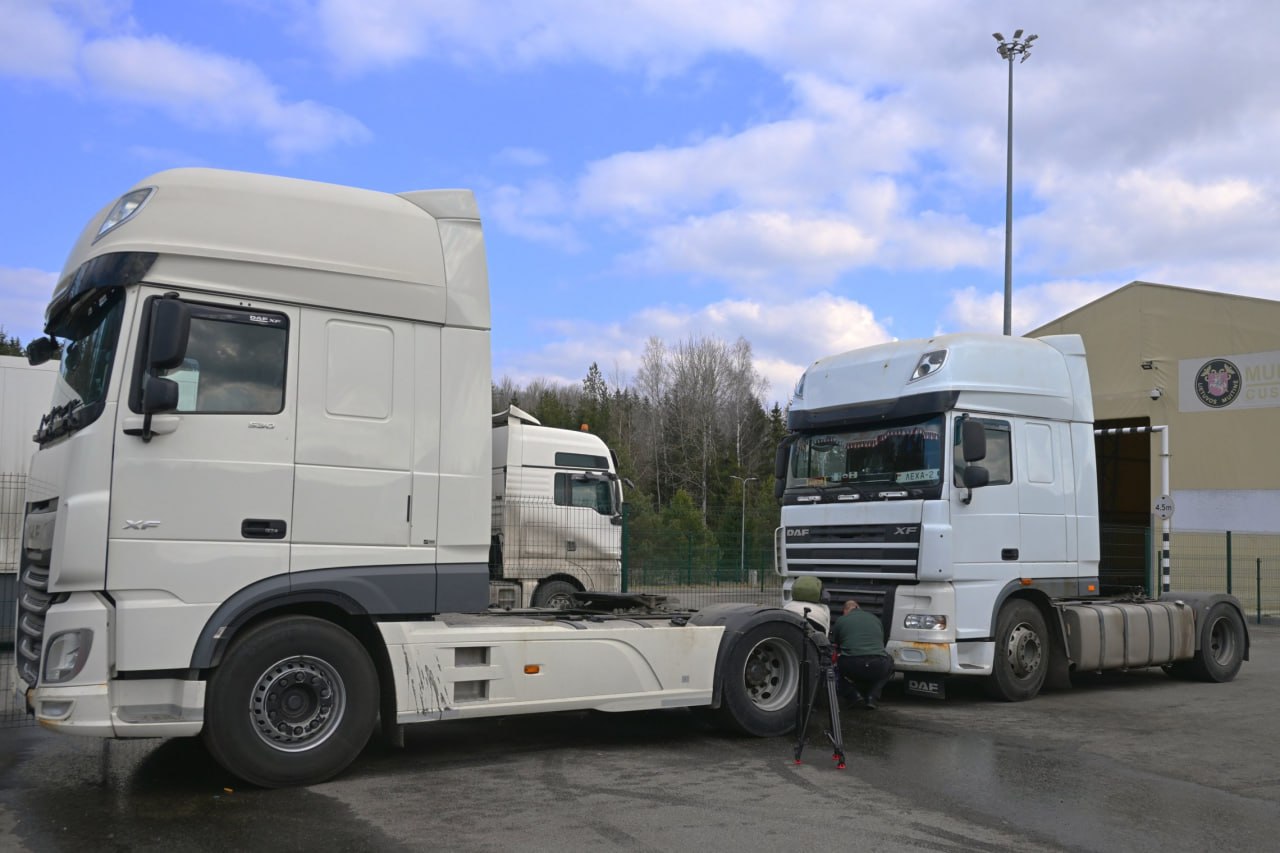
In addition, the drivers were found to have vehicle registration certificates issued for the same trucks, whose identification numbers (VINs) matched those of the trucks registered in the European Union.
It was determined that although the trucks had previously been registered in Lithuania, they had subsequently been registered in Russia. According to the customs office, given that the cargo was delivered to Russia according to the documents, and EU legislation prohibits EU carriers from transporting cargo to Russia and Russian carriers from transporting cargo to the EU, there are suspicions that the trucks were used to circumvent the sanctions imposed by the EU by changing their license plates.
Individuals and legal entities are responsible for violating international sanctions in accordance with the Law on International Sanctions and other laws of the Republic of Lithuania. Legal entities may be subject to financial sanctions, which include fines ranging from 10,000 euros to 50-100 percent of the value of the goods, services, or assets subject to sanctions. Individuals may be held administratively liable for violating international sanctions, which includes fines of up to 6,000 euros, and in cases of repeated violations, higher fines and confiscation.