
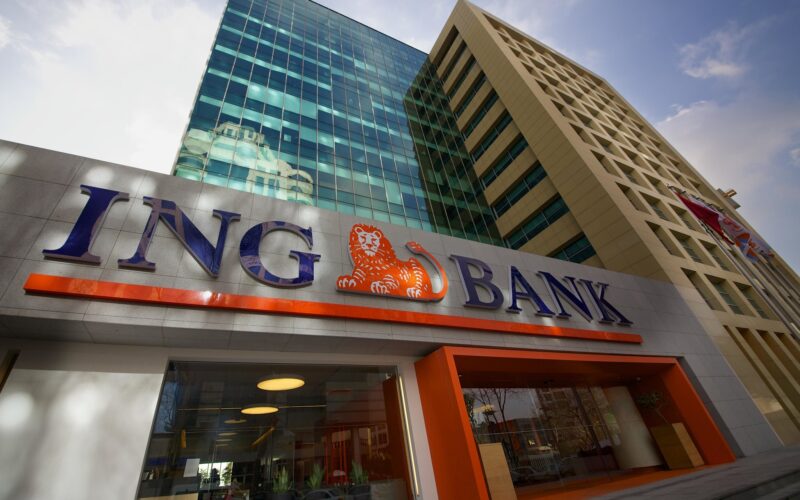
An Amsterdam court has barred ING Bank from terminating its banking relationship with Gazprom International Projects B.V., a subsidiary of Russia’s state-controlled Gazprom group, until the company can establish an alternative banking relationship elsewhere.
The ruling, issued in summary proceedings on 19 October 2026, marks a significant test of how far European banks can go in cutting ties with Russian-linked clients that are not themselves subject to EU sanctions.
The Background
Gazprom International Projects, based in Aalsmeer, is part of the Russian Gazprom International group. It holds a euro account with ING — the only payment facility the Gazprom International group has in Europe. The company’s sole activity is the Sillimanite project, gas extraction in the North Sea, expected to be completed by mid-2028.
On 29 December 2023, ING notified the company that it intended to terminate the banking relationship under Article 35(1) of the Dutch General Banking Conditions, with a three-month notice period. The parties subsequently corresponded, and ING granted several extensions to allow Gazprom time to open an account elsewhere — most recently until 1 October 2026.
ING’s Position
ING argued that continuing the relationship carried unacceptable sanctions and reputational risks. The bank stated:
“Gazprom International Projects … is part of the state-controlled Russian Gazprom group … ING considers it undesirable to create the impression that financial flows indirectly contribute to sustaining Russia’s military efforts.”
ING further noted that Gazprom is active in the energy sector, that sanctions risks are “complex” and require intensive monitoring, and that a sanctions risk can translate into a money-laundering risk. The bank also cited reputational concerns, noting that Dutch media had repeatedly reported on ING’s business ties with Russian parties, leading to parliamentary questions and political outrage.
Gazprom’s Argument
Gazprom International Projects argued that termination would be catastrophic. The company stated that it would no longer be able to meet its statutory payment obligations to the British and Dutch tax authorities, as well as to employees and service providers.
The company submitted a list of 15 banks, both inside and outside the EU, all of which had refused to establish a relationship. It also relied on an opinion from sanctions law expert Bennink Dunin-Wasowicz B.V., which concluded that companies from sanctioned countries — even when not themselves sanctioned — face extreme difficulty finding a bank within the EU.
The Court’s Ruling
The preliminary relief judge held that both parties’ interests were “weighty.” The court found that Gazprom is not sanctioned and that no money-laundering risks had been established. ING submitted a transaction overview but did not allege any dubious or suspicious transactions.
The decisive factor, however, was the imminent entry into force of Article 4:71k of the Dutch Anti-Money Laundering and Anti-Terrorist Financing Act (Wwft) on 1 January 2027. This provision will require banks offering business payment accounts in the Netherlands to allow EU companies registered in the Dutch trade register to apply for and use a basic business payment account in euros. After its entry into force, a bank may refuse such an account only in exceptional circumstances — for example, Wwft risks, where the applicant already has an account, or where the applicant has been convicted of criminal offences.
The court noted:
“Such circumstances do not presently arise here. For that reason, it cannot be excluded that Gazprom may qualify for a basic business payment account under Article 4:71k Wwft.”
The court therefore considered it “not opportune” to terminate Gazprom’s account at this time, given that a refusal would shortly be followed by a fresh request — and likely a fresh legal challenge — under the new legislation.
The Outcome
The court:
-
Prohibited ING from terminating the banking relationship with Gazprom International Projects until the company has secured an alternative banking relationship;
-
Ordered ING to pay the legal costs of €2,226.57, plus statutory interest.
No periodic penalty was imposed, as ING stated at the hearing that it would voluntarily comply with the ruling.
The judgment was delivered by Judge L. Voetelink in the Amsterdam District Court.