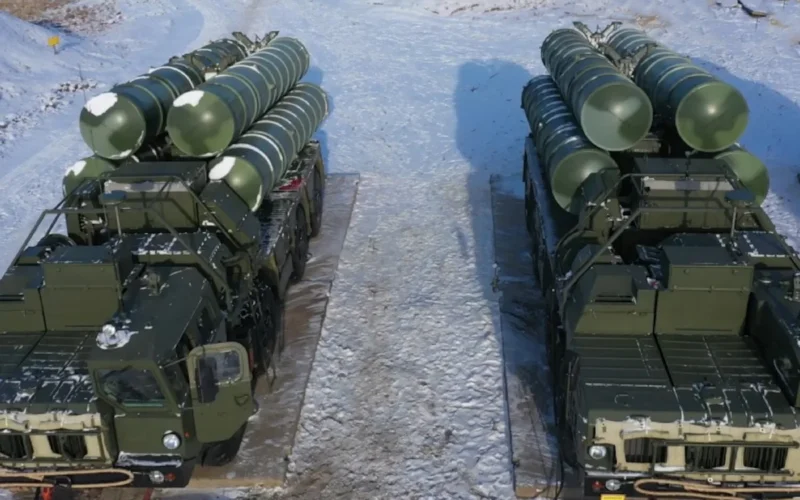
The U.S. Treasury’s Office of Foreign Assets Control (OFAC) has announced a settlement with American company Extreme Networks over exports of networking equipment to JSC Moskovskiy Mashinostroitelniy Zavod Avangard (MMZA), a Russian defence plant that manufactures missiles for the S-300 and S-400 air defence systems.
Under the settlement agreement, signed in October 2026, the company will pay a civil penalty of $1,529,685.
Why the Plant Was Off-Limits
MMZA is a defence enterprise producing missiles for the S-300 and S-400 surface-to-air missile systems and belongs to JSC Concern Almaz Antey. The S-400 is capable of engaging aerodynamic targets — aircraft and drones — at ranges of up to 380 kilometres, and ballistic missiles at up to 60 kilometres.
According to OFAC, since 2002 MMZA has been a majority-owned subsidiary of Almaz Antey, a Russian state-owned defence company designated by OFAC on 16 July 2014 under Executive Order 13661. At all relevant times, therefore, MMZA was a blocked person with which U.S. persons were generally prohibited from dealing, pursuant to OFAC’s 50 Percent Rule. The U.S. State Department separately designated MMZA on 28 June 2022 under E.O. 14024, and OFAC added it to the SDN List.
Nine Illegal Shipments
According to OFAC, between September 2018 and March 2022, Extreme Networks approved and exported networking equipment or services from the United States to MMZA on nine occasions.
The company’s former Russian subsidiary, Extreme Networks Rus LLC, sold branded networking products and services in Russia until it closed operations in March 2022.
In March 2018, Extreme Russia purchased from the Russian subsidiary of a U.S. networking business customer accounts and underlying contracts for telecommunications equipment. MMZA was named as an end-user on one of the contracts. Extreme reviewed and approved the purchase agreement but “did not conduct sufficient due diligence to recognize that MMZA was blocked pursuant to OFAC’s 50 Percent Rule.”
Concealment of the True End-User
Between September 2018 and September 2021, Extreme Russia continued dealing with MMZA, receiving nine additional purchase orders for hardware and software, including routing switches, ports, power supplies, cloud and software subscriptions.
MMZA was the ultimate recipient of each order — yet associated business records falsely named another Russian company, Dmitrovskiy Experimental Mechanical Plant (DEMZ), as the end-user.
Extreme Russia’s engagement with MMZA included multiple meetings with MMZA staff, at least two of which were held at MMZA’s offices in Russia. At least three emails from MMZA staff also referenced Almaz Antey in the signature block. Extreme Russia’s efforts to conceal MMZA included instructing MMZA staff to list DEMZ as their company name when registering for Extreme’s proprietary online portal.
Red Flags Missed
OFAC noted that Extreme’s U.S.-led Global Trade Compliance office conducted compliance screening for each of the nine purchase orders, but missed numerous indications that MMZA was involved. Seven of the nine orders referenced MMZA email addresses or MMZA’s Moscow office address as the ultimate destination.
OFAC further stated that “as early as 2020, Extreme had access to a due diligence and screening resource which would likely have revealed the fact that MMZA is owned by Almaz Antey” — but the company did not perform the necessary inquiry until after the conduct ceased.
Settlement Terms
OFAC determined that the apparent violations were voluntarily self-disclosed and constitute an egregious case. Extreme became aware of the conduct in October 2022 and submitted a disclosure to OFAC.
Under the agreement, the total settlement is $1,529,685**. A portion of **$487,861 will be deemed satisfied by payments under a Non-Prosecution Agreement with the U.S. Department of Justice arising from the same conduct, leaving Extreme obligated to pay $1,041,824 to the Treasury.
Extreme has committed to a five-year sanctions compliance programme, including management commitment, risk assessment, internal controls, testing and audit, training, and annual certification to OFAC. The agreement notes that failure to comply could result in a civil monetary penalty of up to the applicable statutory maximum of $3,399,300.