
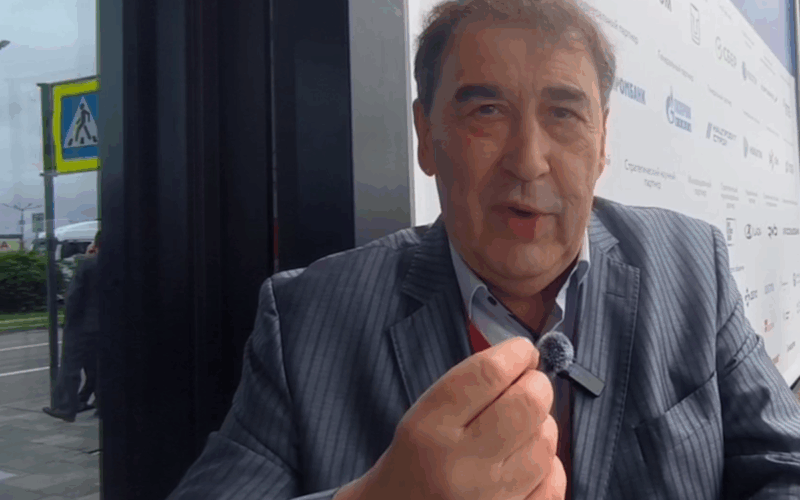
Andrey Nechaev, a Russian economist and politician, spoke about the upcoming 18th package of EU sanctions against Russia. Andrey Nechayev was best known for being the first Minister of Economics of the new Russia from 1992 to 1993.
Andrey Nechaev explained to SanctionsLists.org the influence of the EU’s sanctions on Russia.
Andrey Nechaev: “Let’s call it what it is, the the sanctions are pretty toothless. Because who used foreign credit cards? The middle class!
Who flew to Europe, to other countries where it is now impossible to fly directly? The middle class! Who did the children study with, or did the people themselves receive medical treatment in the same Europe? The middle class!
But as I have repeatedly told my European Union ambassadors, if the ideologists of these sanctions meant that representatives of the middle class would storm the Kremlin, then I have great doubts about their IQ. Rather, some of them, on the contrary, will rally around the current government. If you are Europe with us like this, then we will support dear Vladimir Vladimirovich (Putin – SL).
Where there is a real danger, it is in the so-called secondary sanctions.
If there really is a real threat of our partners losing their Western markets, we should be aware that China and India, as well as many other countries, which have replaced Europe in purchasing Russian oil and other products, may decide not to buy from Russia. China is our big brother, and the American and European markets are more important and interesting for them than the Russian market. If there is any risk, they might say that they stand with us, but they will not buy anything from us or conduct banking transactions anymore. This has already happened in China.
Large Chinese banks no longer accept payments in yuan, and payments are now made through smaller credit institutions that are less likely to be affected by Western sanctions.
Although I’ve said this many times and I take my hat off to Russian business, the remains of the market economy I helped build in the early 1990s have allowed these geopolitical challenges to feel much less painful than many experts predicted at the start.
Russian business managed to establish parallel imports, yes, it has become more complex logistically and more expensive due to intermediaries and logistics, becoming a strong additional factor in Russian inflation, which is now the number one problem in the Russian economy. Nevertheless, there is no lack of goods as experts had predicted. The oil problem has been practically resolved, although gas is more complicated. You can’t simply move a pipeline from Europe to China.”