
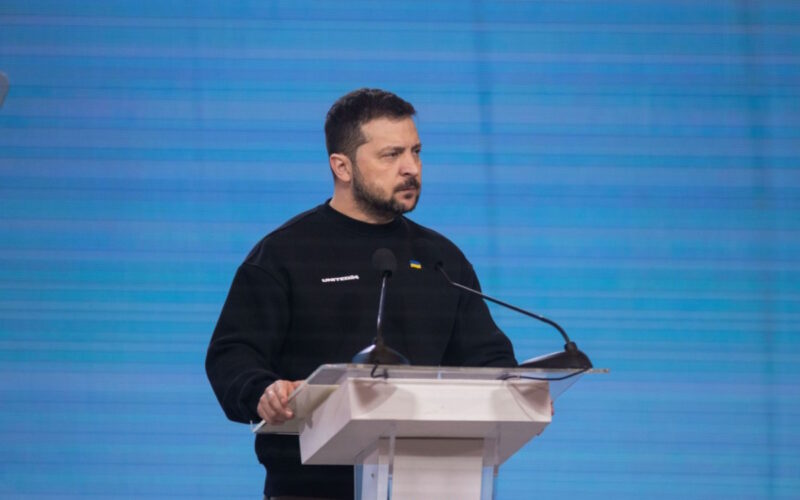
On July 6, 2026, President of Ukraine Volodymyr Zelenskyy signed two decrees – No. 587/2026 and No. 588/2026 – enacting decisions of the National Security and Defense Council of Ukraine (NSDC) to impose sanctions against Russian propagandists, cultural organizations, and suppliers of equipment for Russia’s military-industrial complex .
The sanctions packages target a total of 38 legal entities and 57 individuals . The restrictions include asset freezes, a complete halt to trade operations and resource transit through Ukrainian territory, bans on participation in privatization and state property leases, restrictions on government procurement, termination of cultural, scientific, educational, and sports contacts, and a prohibition on technology transfers and intellectual property rights .
Cultural and Propaganda Organizations Sanctioned
Among the key organizations hit by sanctions are:
-
ANO “Russia – a Country of Opportunities” (Россия – страна возможностей) – a presidential platform created on Vladimir Putin’s initiative on May 22, 2018, which presents projects for people of different ages across Russia ;
-
The All-Russian organization “Union of Writers of Russia” (Союз писателей России) – including its regional branches established in the temporarily occupied territories of Ukraine, specifically in Crimea, Sevastopol, Donetsk, and Luhansk regions .
These sanctions are part of Ukraine’s broader strategy to counter Russian propaganda and disrupt the activities of organizations that support Russia’s aggressive policies. In a related move, Ukraine also recently imposed sanctions on the “Union of Journalists of Russia” and propaganda media outlets such as Gazeta.Ru and Lenta.Ru .
Individuals Sanctioned for Propaganda and War Support
The sanctions list includes several prominent Russian propagandists and cultural figures :
| Name (Latin) | Name (Cyrillic) | Role / Affiliation |
|---|---|---|
| Maria Kiselyova | Мария Киселева | Moscow City Duma deputy, TV presenter, former synchronized swimmer; visited occupied Mariupol for propaganda events in 2023 and acted as Putin’s proxy in the 2012 and 2018 presidential elections |
| German Sadulaev | Герман Садулаев | Writer and propagandist |
| Sergey Pereslegin | Сергей Переслегин | Literary critic and publicist |
| Maxim Kalashnikov | Максим Калашников | Propagandist |
| Ilya Tumanov | Илья Туманов | Former military pilot, participated in the war in Syria, now engaged in Russian propaganda |
According to the Main Intelligence Directorate of Ukraine’s Ministry of Defense, Maria Kiselyova has been sanctioned for supporting Russia’s war against Ukraine by spreading Kremlin propaganda narratives, providing material support to Russian military personnel and their families, visiting temporarily occupied Sevastopol in 2014 and Mariupol in 2023, and being a member of the pro-Putin movement “People’s Front ‘For Russia'” .
Sanctions Against Russia’s Military-Industrial Supply Chain
The second sanctions package (Decree No. 587/2026) targets 42 Russian citizens and 30 legal entities – limited liability companies and joint-stock companies – involved in supplying equipment to Russian military-industrial complex plants that produce components for missiles .
Among the sanctioned companies are:
-
Burevestnik Center (центр “Буревестник”) – participates in the production of mortars and 152-mm self-propelled artillery installations “Malva” ;
-
KAM-Engineering (КАМ-Инжиниринг) – plays a significant role in the Russian military-industrial complex, conducting final testing of parts for combat aviation and individual missile systems .
Sanctions Duration and Enforcement
Some sanctions, particularly those involving the deprivation of Ukrainian state awards, are indefinite. Other restrictions have been imposed for a period of ten years . The sanctions block assets, terminate trade operations, and prohibit the transfer of technologies and intellectual property rights .
These measures are part of Ukraine’s ongoing efforts to isolate Russian entities and individuals that support or facilitate the war against Ukraine, targeting not only direct military suppliers but also cultural figures and organizations that legitimize or propagate Russia’s aggression