
On July 6, 2026, the United Kingdom imposed a new package of sanctions under its Chemical Weapons regime, targeting two leading Russian scientific research institutes and seven individuals involved in the research, development, and production of the deadly toxins Novichok and Epibatidine .
The sanctions come ahead of the NATO Summit in Ankara (July 7-8) and the 112th Executive Council session at the Organisation for the Prohibition of Chemical Weapons (OPCW) in The Hague . The UK has now sanctioned over 3,400 individuals and organisations in response to Russia’s aggression, including this latest action against its illegal chemical weapons programme .
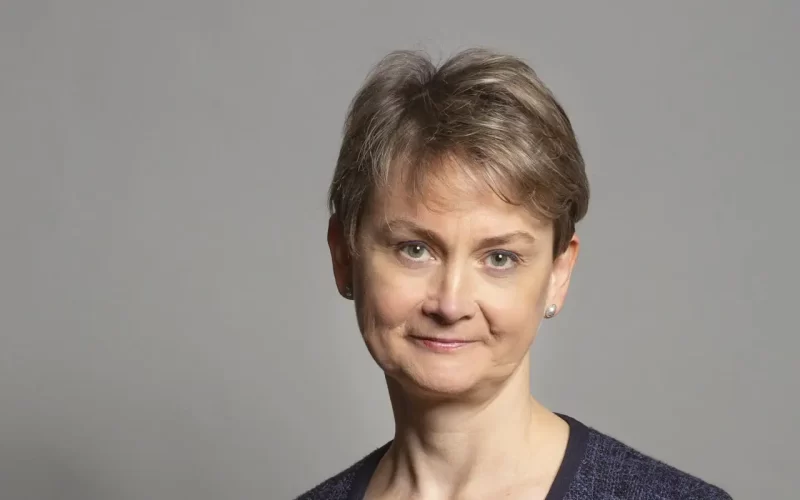
Foreign Secretary Yvette Cooper Condemns Russia’s Use of Chemical Weapons
“Russia’s repeated use of chemical weapons is a sickening violation of international law and a direct threat to global security.”
“From the use of Novichok nerve agents in Salisbury to Epibatidine in Siberia, poisoning Dawn Sturgess and Alexei Navalny, Russia continues to use barbaric tools to inflict death and suffering on innocent civilians, including in Ukraine.”
“We will continue to call out Russia’s violations of the Chemical Weapons Convention, hold those responsible to account, and work with allies to deter further use of these dangerous weapons.”
Background: Poisonings That Triggered the Sanctions
Alexei Navalny – Epibatidine Poisoning (2024)
In February 2024, at the Munich Security Conference, the UK together with Sweden, Germany, France, and the Netherlands confirmed that Russian opposition activist Alexei Navalny was poisoned with a lethal toxin, Epibatidine, whilst being held in Russian custody in a Siberian penal colony . Navalny did not survive .
Epibatidine is a poison derived from the skin of a toxic dart frog found in the Amazon rainforest. As the UK Parliament statement noted: “only the Russian state had the means, motive and opportunity to administer this” .
Navalny had previously survived a Novichok nerve agent poisoning in 2020, which he attributed to the Kremlin .
Dawn Sturgess – Novichok Poisoning (2018)
In March 2018, a Novichok nerve agent was used in Salisbury in an attempt to assassinate former Russian spy Sergei Skripal and his daughter Yulia . Members of a Russian GRU military intelligence squad smeared the nerve agent on Skripal’s door handle .
Tragically, Dawn Sturgess, a British national, died in July 2018 after being exposed to the same Novichok chemical weapon, which was left in a discarded perfume bottle in Amesbury, Wiltshire .
Sanctioned Individuals
The following individuals have been added to the UK sanctions list, facing asset freezes and travel bans :
| Name | Position | Institute |
|---|---|---|
| Artur Zhirov | Director | SC Signal |
| Andrei Antokhin | Deputy Head – conducted research on Novichok | SC Signal |
| Sergei Chepur | Head | GNIII VM |
| Vladimir Kondratyev | Director – co-authored a paper on Epibatidine testing | GosNIIOKhT |
| Aleksandr Makhlay | Chief Scientist | SC Signal |
| Ivan Kravstov | Head of 4th Scientific Research Department | SC Signal |
| Viktor Taranchenko | Head of 1st Scientific Research Centre – conducted research on Novichok | SC Signal |
Sanctioned Entities
SC Signal (NTs Signal)
A Russian state scientific research institute targeted for its involvement in the development and synthesis of toxic chemicals for purposes prohibited under the Chemical Weapons Convention .
GNIII VM (State Research Institute of Military Medicine)
A Russian state scientific research and testing institute for military medicine, sanctioned for its role in Russia’s undeclared and illegal chemical weapons programme .
GosNIIOKhT (State Scientific Research Institute for Organic Chemistry and Technology)
Previously sanctioned by the UK in October 2020, this institute is where Vladimir Kondratyev serves as Director .
UK Government’s Position on Russia’s Chemical Weapons Programme
The UK government has stated that Russia has not destroyed all its chemical weapons as claimed in 2017, and that it has not renounced biological weapons as required under the Biological and Toxin Weapons Convention .
The sanctions package builds upon prior sanctions for Russia’s use of chemical weapons on the battlefield in Ukraine . The UK has made it clear that it holds the Russian state responsible for Navalny’s death, stating that “only the Russian state had the means, motive and opportunity to deploy this lethal toxin to target Navalny”