
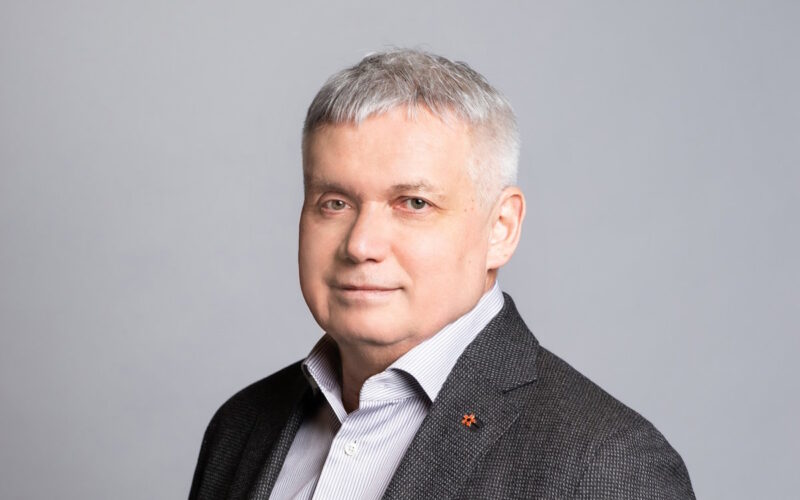
On August 20, 2026, Latvian Foreign Minister Baiba Braže took a decision that sent ripples through Russian business circles: she added Russian citizen Sergey Bochkarev to Latvia’s list of undesirable persons, imposing an indefinite entry ban . The news barely registered in Russian media, yet it tells a remarkable story of how quickly sanctions enforcement can catch up with those who underestimate it.
Bochkarev, since February 2022, has served as General Director of Rostelecom-Data Centers (RTK-TsOD) , a subsidiary of Russia’s state-controlled telecommunications giant PJSC Rostelecom. The company develops data centers, cloud services, and system integration solutions—infrastructure that powers Russia’s digital state.
The trigger was remarkably mundane: Instagram photos. Latvian investigative outlet Kompromat.lv discovered Bochkarev’s personal account featuring images of his 2026 New Year celebrations . The photographs appeared to have been taken in Jurmala, Latvia’s premier beach resort, with its distinctive pine trees visible through apartment windows.
Bochkarev swiftly deleted his Instagram account after the publication. But the archived digital traces were enough: analysis of the photographs confirmed he had been present in Latvia, enjoying what the investigation described as “quiet luxury” in Jurmala while his company managed state secrets.
What made this problematic? The parent company, Rostelecom, and its president Mikhail Oseevsky have been under EU sanctions since March 2022 . Under Latvian immigration law, foreigners must complete a questionnaire on the official eta.gov.lv portal before travel, declaring the purpose of their visit and contact details [citation:original text]. Bochkarev’s presence in Latvia – a NATO and EU member state—while leading a subsidiary of a sanctioned entity raised immediate questions from civil society.
The Public Outcry
On July 27, 2026, Dmitry Savvin, head of the Association for the Promotion of Russian Civil Society (AREM), formally requested the State Security Service (VDD) to investigate Bochkarev’s presence in Latvia . Savvin framed it as a broader issue:
“Our principled position is to help those who are persecuted by the Putin regime, while actively countering pro-Kremlin elements, their penetration into Latvia, and the strengthening of the neo-Soviet fifth column here ,” Savvin stated.
Why Rostelecom and Oseevsky Are Sanctioned
The EU first sanctioned Oseevsky on March 15, 2022, as part of measures targeting 14 major Russian businessmen and company heads in sectors providing substantial revenue to the Russian government . The official justification, as recorded in UK sanctions documentation, states that Oseevsky is “or has been President of PJSC Rostelecom, Russia’s largest provider of digital services and solutions. Oseevsky is or has been involved in obtaining a benefit from or supporting the Government of Russia as a Director or equivalent of an entity carrying on business in the information, communications and digital technologies sector – a sector of strategic significance to the Government of Russia“.
The sanctions against Oseevsky include an asset freeze, travel ban, trust services sanctions, and since April 2025, a director disqualification . Rostelecom itself has been sanctioned by Australia and other allies.
Bochkarev’s role goes far beyond routine IT management. In a July 2025 interview with Interfax, he described his position in terms that underscore its strategic importance. RTK-TsOD undertakes large-scale work to replace equipment for “critical state information systems to ensure their safe operation “.