The EU’s Official Journal on 23 November published details of lawsuits filed by МКПАО «ВК» (MKPAO VK) and its subsidiary ООО «Мах» (OOO MAX), challenging the sanctions imposed on them by the Council of the European Union. The companies filed their applications with the General Court in October 2026, but the substance of their arguments has only now become public.
VK’s Argument: Claims Are “Unsubstantiated and False”
According to the Official Journal, VK argues in its application that “most of the statements (used as grounds for the sanctions listing) are not only unsubstantiated and false, but also insufficient to demonstrate that the applicant ‘provides technical support for the suppression of civil society and democratic opposition, including by facilitating and enabling such actions’.”
The company contends that the Council’s reasoning fails to meet the evidentiary threshold required to justify restrictive measures. VK maintains that the allegations do not establish the conduct described in the listing criteria.
Background: Why VK Was Sanctioned
The EU imposed sanctions on VK and its subsidiary ООО «Коммуникационная платформа» (OOO Communication Platform), the developer of the MAX messenger, in July 2026. According to the Council’s designation, VK is the parent company of the entity that created MAX, and the app’s development was supervised by the FSB, Russia’s Federal Security Service.
The Council also stated that MAX possesses surveillance capabilities, including the ability to track communications even when VPNs are used, collect data on other applications installed on a user’s phone, and install autonomous updates. The EU further noted that MAX’s promotion was accompanied by restrictions on the operation of other applications in Russia, including WhatsApp and Telegram.
VK responded to the sanctions at the time by stating that they did not affect the normal operation of VK or MAX, and that all services remained available to users.
The Legal Challenge
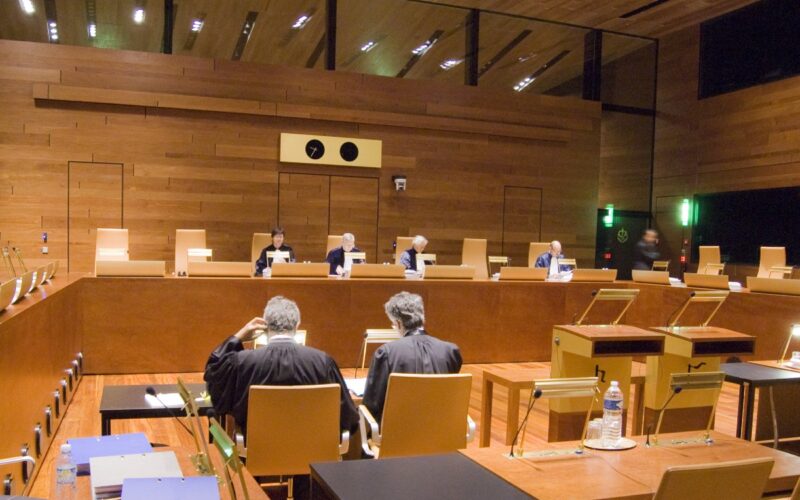
VK filed its application with the General Court of the European Union on 7 October 2026. At the time, the company’s press service stated that it considered the Council’s decision “illegal and unfounded” and demanded the annulment of the sanctions. The subsidiary MAX filed a parallel challenge, details of which were published in the same Official Journal edition.
The publication of the applications in the Official Journal is a procedural step that makes the legal arguments public. The cases will now proceed before the General Court, where VK and MAX will seek to persuade the judges that the Council lacked sufficient evidence to justify their designation.
The outcome will be closely watched as a test of the evidentiary standards the EU must meet when sanctioning technology companies for their alleged role in supporting state repression.